
دستاورد جدید دانشکدگان فنی دانشگاه تهران در فناوری ذخیرهسازی انرژی - ece- دانشکده مهندسی برق و کامپیوتر
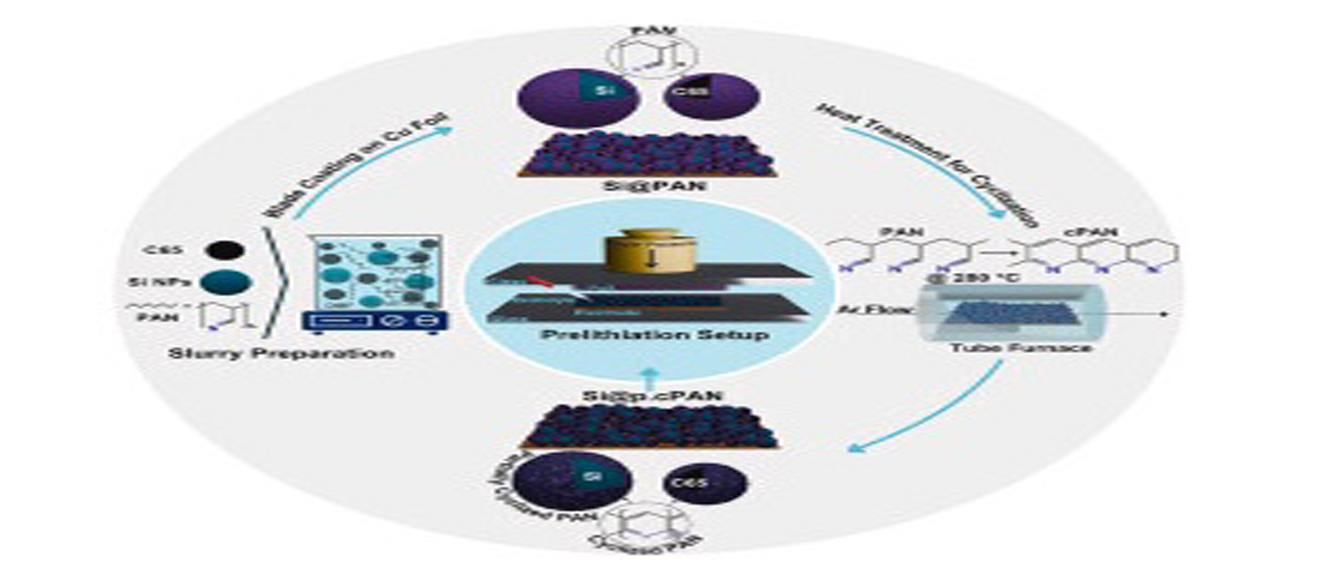
Researchers at the Energy Storage Laboratory of the University of Tehran's College of Engineering have developed a novel and rapid method to improve the performance of silicon anodes, successfully increasing the usable capacity and cycle life of lithium-ion batteries. This achievement could play a significant role in the development of next-generation batteries for electric vehicles, advanced electronic devices, and energy storage systems.
According to the University of Tehran's Public Relations Office, lithium-ion batteries are among the world's most strategic technologies today, playing a vital role in the advancement of electric transportation, renewable energy utilization, and electronic device manufacturing. One of the major challenges in improving these batteries is increasing their energy storage capacity while extending their operational lifespan.
In this context, researchers at the Energy Storage Laboratory, School of Electrical and Computer Engineering, University of Tehran, have introduced an innovative approach to enhance the performance of silicon anodes in lithium-ion batteries. Silicon is considered a promising alternative to conventional graphite anodes because of its exceptionally high lithium storage capacity. However, its significant volume expansion during charge and discharge cycles has limited its widespread application.
In this study, the researchers employed a polyacrylonitrile (PAN) polymer coating together with a rapid pre-lithiation process to improve the stability and electrochemical performance of silicon anodes. In this method, the electrode is pre-lithiated in only three minutes through direct contact with lithium metal. This process compensates for part of the initial lithium loss while promoting the rapid formation of a more stable solid electrolyte interphase (SEI) on the anode surface.
Experimental results showed that the pre-lithiated silicon anodes retained 71.7% of their initial capacity after 150 charge–discharge cycles, compared with 63.6% for untreated samples. In addition, the Coulombic efficiency of the electrodes reached approximately 99%, indicating highly stable electrochemical performance.
When evaluated in full cells paired with an NMC811 cathode, the initial Coulombic efficiency increased from 44% to approximately 79%, while the first-cycle specific capacity improved from 94 to 159 mAh g⁻¹. Furthermore, capacity retention after 100 charge–discharge cycles increased from 52% to 69%, demonstrating the significant impact of this technology on improving lithium-ion battery performance.
Among the key advantages of the proposed method are its simplicity, low cost, rapid processing time, and scalability for industrial manufacturing, making it a promising candidate for commercial implementation.
The findings of this research have been published in the prestigious Journal of Power Sources, one of the leading international journals in battery technology and energy storage systems.
This work represents an important step toward the development of high-capacity, long-lasting batteries and may facilitate the broader adoption of silicon anodes in next-generation lithium-ion batteries.
The research was carried out by Dr. Soraya Hournam, Dr. Sadegh Ghorbanzadeh, and Dr. Mohammadreza Yasoubi, researchers at the University of Tehran's Energy Storage Laboratory, under the supervision of Dr. Zeinab Sanaei, faculty member of the School of Electrical and Computer Engineering and head of the Energy Storage Laboratory at the University of Tehran.
The article is available at:
https://www.sciencedirect.com/science/article/abs/pii/S0378775325017021